

Where Philanthropy Fits: Reflections from Ireland’s First National Philanthropy Awareness Event

by: Sinead Dalton
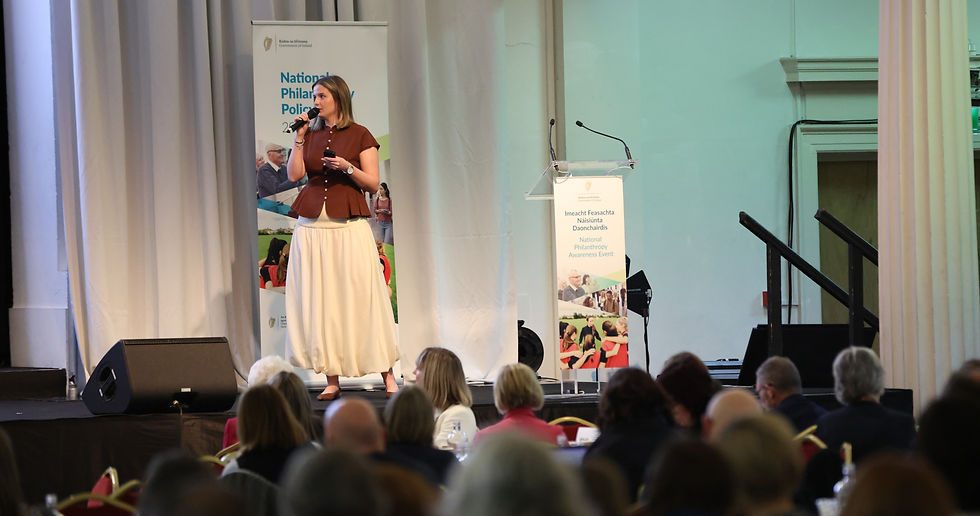
On 14 May 2026, government representatives, philanthropic organisations, community groups, corporates, researchers and practitioners gathered in the RDS for Ireland’s first National Philanthropy Awareness Event.
Hosted by the Department of Rural and Community Development and the Gaeltacht as part of the implementation of Ireland’s National Philanthropy Policy, the event explored a central question:
Where does philanthropy fit within our work, within Irish society and within public life?
The theme of the day, Where Philanthropy Fits – Roles, Partnerships and Public Value, reflected an important shift in the conversation around philanthropy in Ireland. Discussions centred on collaboration, innovation, partnership, and the role philanthropy can play alongside public systems and community action.
Many speakers explored how philanthropy can complement public systems by supporting innovation, building evidence, testing new ideas and responding flexibly to social challenges.
Tanaiste and Minister for Finance, Simon Harris T.D. opened the event with a thoughtful, optimistic and practical address, speaking about how philanthropy for public good is already embedded across Ireland often quietly and without recognition. Defining philanthropy as “part of modern leadership and collective citizenship”, he also reminded attendees that even the RDS itself is an example of philanthropy’s long-standing contribution to Irish civic life.
The event was expertly guided by Susan HayesCulleton, whose thoughtful moderation helped maintain an honest and engaging discussion throughout the day.
Learning from experience
One of the strongest themes across the event was the importance of learning from real examples, both successes and challenges.
Bairbre Nic Aongusa, Assistant Secretary, DRCDG shared an honest reflection on her experience working with philanthropy during her time in the Department of Health, including partnerships involving The Atlantic Philanthropies and Genio.
Her contribution highlighted something that recurred throughout the day: meaningful collaboration requires patience, trust and a willingness to do things differently. She spoke about the role philanthropy played in supporting innovation in mental health and community services, particularly enabling early-stage work that may have been difficult to fund through traditional structures alone.
This was followed by Hazel Hennessy presenting an impactful video along with research and insights on the scale, impact and opportunities within Irish philanthropy.
One of the most impactful moments came from Katelyn McDaid, who spoke about receiving educational support through 5Ten Trust. Her reflections on access to education, opportunity and “paying it forward” brought a human dimension to discussions that can often remain abstract.
A fireside conversation between Éilis Murray and Louise McElvaney explored the motivations behind giving, the realities of establishing philanthropic structures, and some of the barriers that still exist within Ireland.

The power of lived experience
The day’s keynote contribution from Lady Mary Peters was one of the most memorable moments of the event.
Speaking about the work of the Mary Peters Trust, she described the importance of supporting talented young athletes before they reach elite level at the stage where many risk missing opportunities due to financial barriers. It is often at this early stage of development where philanthropic funding and support can make the greatest difference. Her message around opportunity, sport and “paying it forward” resonated strongly throughout the room.
Partnerships in practice
The afternoon sessions moved from theory into practical examples of philanthropy in action.
Speakers from Citywise Education, Deloitte, The Common Knowledge Centre and SSE Airtricity explored what collaborative partnerships look like in practice.
A recurring theme was that effective philanthropy is rarely just about funding. Speakers repeatedly referenced relationships, shared values, trust, learning and long-term thinking. And the importance of strategic long term giving for long term impact.
This continued into the panel discussion featuring representatives from Government, local authorities, culture, sport and philanthropy. Panellists spoke candidly about the realities of collaboration, including institutional caution, differing timelines and the need to better understand the pressures each sector operates within.
At the same time, there was clear recognition that philanthropy can play a unique role in supporting innovation, experimentation and community-led approaches.

Closing the day
The event closed with an address from Minister of State, Jerry Buttimer T.D., who reflected on the discussions throughout the day and acknowledged the significant work involved in bringing Ireland’s first National Philanthropy Policy to this point.
He reinforced the purpose of the policy: creating a stronger environment for giving, clearer opportunities for engagement, and greater awareness of the role philanthropy can play in supporting public good.
Importantly, he also reiterated the Department’s commitment to helping create the conditions needed for philanthropy to grow in Ireland through awareness, partnership opportunities and continued exploration of measures that support giving such as tax incentive and public benefit.
Looking forward
The event highlighted that Ireland is still at the beginning of this conversation.
The National Philanthropy Policy has created an important framework, but the real work now lies in building relationships, trust and practical pathways for collaboration across sectors.
But what the day demonstrated clearly was that there is appetite for that dialogue.
Across the sessions, workshops and conversations, there was a sense that people are increasingly open to exploring how philanthropy can contribute alongside public systems and community leadership as part of a broader ecosystem of public good.
There was an understanding that collaboration between philanthropy and Government should not be idealised or oversimplified. It requires transparency, accountability, clarity of roles, and ongoing dialogue.
Perhaps most importantly, the event showed that many of these collaborations are already happening across Ireland. The opportunity now is to better understand them, learn from them, and create the conditions for more effective partnerships into the future.
As Ireland continues implementing the National Philanthropy Policy, this event felt less like a conclusion and more like the beginning of a longer national conversation.


Comments